- Out-of-Stock
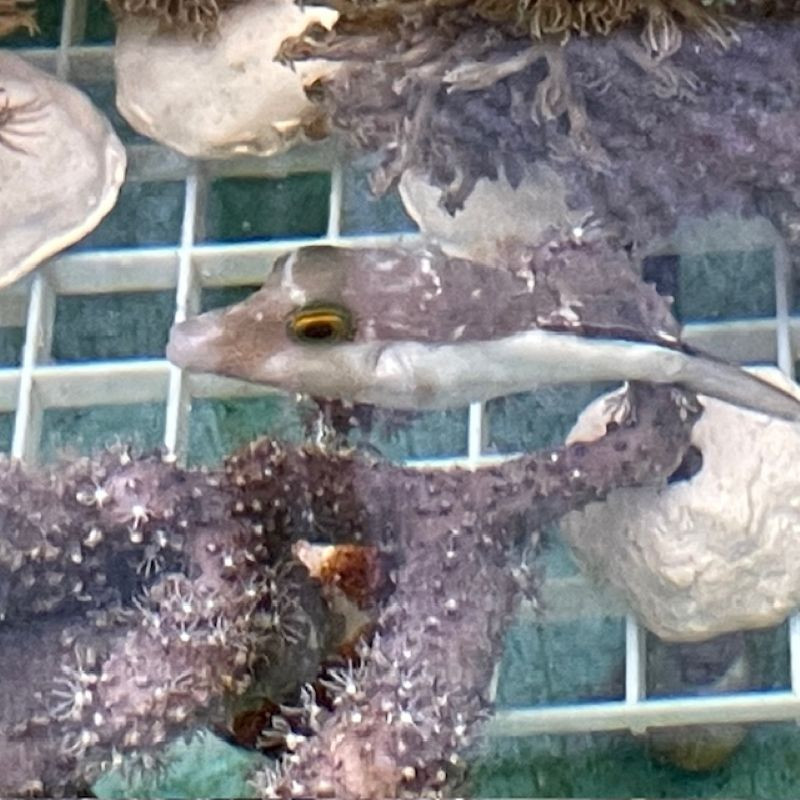


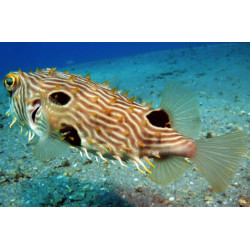
The Sharpnose Puffer (Canthigaster rostrata) is a small reef fish from the Caribbean and tropical Atlantic, typically 2.5–3.5 inches long. Light brown to olive with blue spots and faint vertical bands, it is peaceful and non-aggressive. When threatened, it can inflate its body for defense. Feeds on algae, small invertebrates, and detritus. Dioecious, with males sometimes guarding eggs. Non-venomous but contains tetrodotoxin in some tissues, making it potentially toxic if ingested. Moderate care in captivity with stable water, hiding spots, and a varied diet.
 Delivery policy
Please refer to the Terms and Conditions section for Live Arrival Policy and Shipping information.
The Sharpnose Puffer is a small, colorful pufferfish commonly found in coral reefs, seagrass beds, and rocky crevices of the Caribbean and tropical Atlantic. Known for its elongated snout and distinctive patterning, it is a peaceful but shy species.
Coloration:
Generally light brown to olive with small blue spots across the body and faint vertical bands. The snout is slightly pointed, giving it its “sharpnose” name. The fins are semi-transparent, often tinged with yellow.
Abundance & Typical Size:
Moderately common in shallow reef areas. Adults typically measure 2.5–3.5 inches in length.
Behavior & Aggressiveness:
Non-aggressive toward humans and other reef inhabitants. When threatened, it can inflate its body as a defensive mechanism. Feeds on algae, small invertebrates, and occasionally sponges or detritus.
Reproduction & Sexuality:
Dioecious (separate sexes). Eggs are laid in crevices or under rocks, and males may guard them until hatching.
Venom:
Non-venomous, but like other pufferfish, it contains tetrodotoxin in certain tissues, making it potentially toxic if ingested.
Tenure in Captivity:
Moderate. Requires stable water conditions, hiding spots, and a varied diet including algae and meaty foods. Not aggressive, but careful feeding is needed due to toxin risk.
Fun Facts:
Inflates its body to deter predators.
Sharpnose Puffer can produce subtle clicking sounds with its teeth.
Small size and colorful pattern make it popular in reef aquariums.
Helps control algae growth by grazing in reef areas.

Data sheet
You might also like
The Sharpnose Puffer (Canthigaster rostrata) is a small reef fish from the Caribbean and tropical Atlantic, typically 2.5–3.5 inches long. Light brown to olive with blue spots and faint vertical bands, it is peaceful and non-aggressive. When threatened, it can inflate its body for defense. Feeds on algae, small invertebrates, and detritus. Dioecious, with males sometimes guarding eggs. Non-venomous but contains tetrodotoxin in some tissues, making it potentially toxic if ingested. Moderate care in captivity with stable water, hiding spots, and a varied diet.