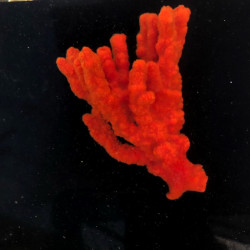
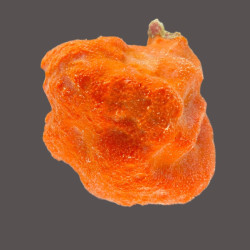
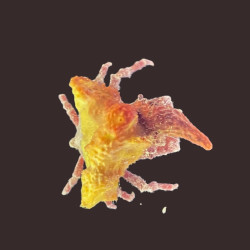
The Orange Ball Sponge (Tethya aurantium) is a bright orange, round sponge common in the Caribbean and tropical Atlantic. It lives on reefs and rocks, filters seawater, and reproduces sexually and asexually. Hermaphroditic, non-venomous, and an indicator of healthy marine habitats.
 Delivery policy
Please refer to the Terms and Conditions section for Live Arrival Policy and Shipping information.
The Orange Ball Sponge is a bright, spherical sponge commonly found in the Caribbean Sea and the tropical Atlantic Ocean. It typically grows on coral reefs, rocky bottoms, and other hard surfaces where the water is clear and warm.
This sponge is easily recognized by its round shape and vivid orange coloration, though it can sometimes appear yellow-orange or reddish. Its surface is rough and bumpy, with small openings through which it filters water. The texture is firm but slightly elastic.
Most individuals measure between 5 and 15 centimeters (2 to 6 inches) in diameter, though larger specimens can occasionally be found in deeper or more sheltered areas.
In the Caribbean and tropical Atlantic, the Orange Ball Sponge is often seen in shallow reefs (5–30 meters deep), attached to rocks, corals, or mangrove roots. It is a common and resilient species, able to tolerate mild currents and varying light levels.
The Orange Ball Sponge is hermaphroditic, possessing both male and female reproductive cells. It reproduces sexually by releasing eggs and sperm into the water and asexually through fragmentation, where a small piece can grow into a new sponge.
This sponge is non-aggressive and non-venomous. However, it produces mild chemical compounds to deter predators and prevent the growth of algae and bacteria on its surface.
Fun Facts:
The Orange Ball Sponge helps maintain reef health by filtering large volumes of seawater, removing bacteria and organic particles.
Its bright color is influenced by symbiotic microorganisms that live inside its tissues.
Because it thrives in clean waters, its presence often indicates a healthy marine ecosystem.

Data sheet
You might also like
The Orange Ball Sponge (Tethya aurantium) is a bright orange, round sponge common in the Caribbean and tropical Atlantic. It lives on reefs and rocks, filters seawater, and reproduces sexually and asexually. Hermaphroditic, non-venomous, and an indicator of healthy marine habitats.