- Out-of-Stock


The Yellowhead Wrasse (Halichoeres garnoti) is a vibrant Caribbean reef fish, 4–6 inches long, known for its bright yellow head and color changes through life. Peaceful and non-venomous, it starts life as a female and later becomes male. Juveniles often act as cleaner fish, removing parasites from larger species. It buries itself in sand at night and thrives in aquariums with sandy bottoms and clean water. Active, intelligent, and strikingly colored, it’s one of the most recognizable wrasses in the tropical Atlantic.
 Delivery policy
Please refer to the Terms and Conditions section for Live Arrival Policy and Shipping information.
The Yellowhead Wrasse is a strikingly colorful reef fish found throughout the Caribbean and tropical Atlantic. Recognized by its bright yellow head and vivid body patterns, this species is active, intelligent, and an important cleaner fish on reefs. It is often seen darting among corals and rocks, helping control small invertebrate populations.
Coloration:
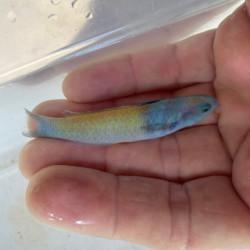
Juveniles are yellow below and dark blue above, with a black spot on the dorsal fin.
Females keep a blue back and yellow underside with faint stripes.
Males develop intense blue, green, and orange colors with a distinct bright yellow head.
Color and pattern change as they mature, making them visually dynamic.
Typical Size and Abundance:
Average size: 5–6 inches (12–15 cm)
Maximum size: about 7 inches (18 cm)
Abundance: Common on shallow coral reefs, rocky areas, and sandy bottoms across the Caribbean and tropical Atlantic.
Behavior and Aggressiveness:
Generally peaceful and social; active during the day.
May show mild territorial behavior toward smaller wrasses or new tankmates.
Sleeps buried in sand at night for safety.
Reproduction and Sexuality:
Sequential hermaphrodite — all start as females and later become males.
Sexual reproduction; males and females pair temporarily during breeding.
Toxicity:
Non-venomous and harmless to humans.
Care Difficulty:
Moderate. Adapts well to aquariums with sandy substrate, stable water conditions, and live rock for exploration. Needs a covered tank (it may jump). Eats small invertebrates and frozen marine foods.
Fun Facts:
The Yellowhead Wrasse changes both color and sex as it ages.
Juveniles often act as “cleaner fish,” removing parasites from larger species.
It buries itself in sand at night to hide from predators.
Highly active during the day and constantly foraging.
Its vivid yellow head makes it one of the most recognizable wrasses on Caribbean reefs.

Data sheet
You might also like
The Yellowhead Wrasse (Halichoeres garnoti) is a vibrant Caribbean reef fish, 4–6 inches long, known for its bright yellow head and color changes through life. Peaceful and non-venomous, it starts life as a female and later becomes male. Juveniles often act as cleaner fish, removing parasites from larger species. It buries itself in sand at night and thrives in aquariums with sandy bottoms and clean water. Active, intelligent, and strikingly colored, it’s one of the most recognizable wrasses in the tropical Atlantic.