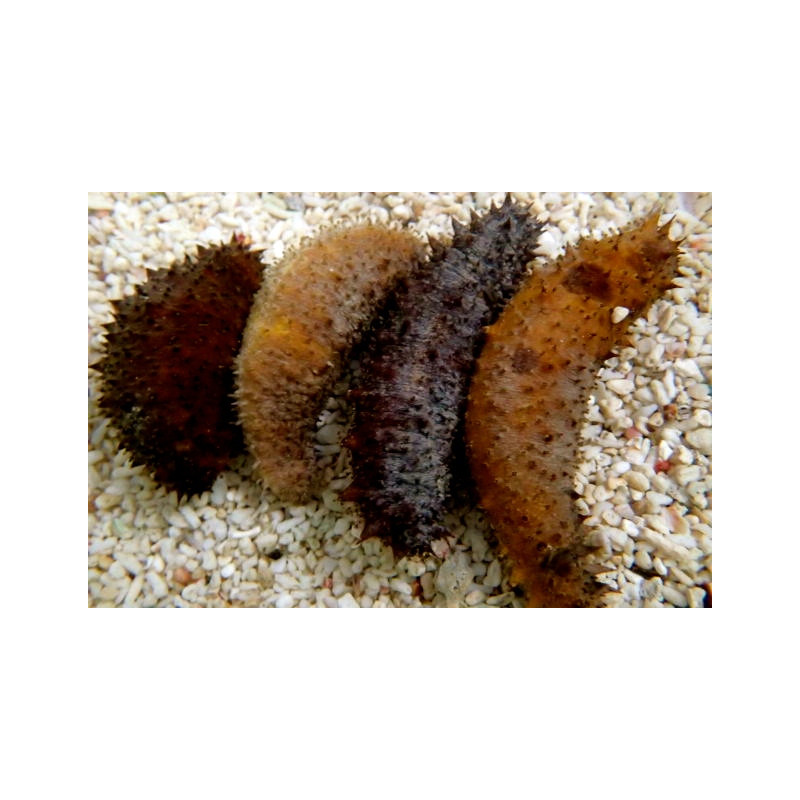

The Sea Cucumber (Class Holothuroidea) is a soft-bodied echinoderm found in the Caribbean and tropical Atlantic, typically 1-6 inches long. Non-aggressive and slow-moving, it feeds by ingesting sediment and extracting organic matter. Most species are dioecious, with external fertilization, and some can reproduce asexually. Non-venomous, though some produce sticky filaments for defense. Vital for reef health, they recycle nutrients and aerate sediments. Moderate to difficult in captivity due to substrate, water quality, and feeding requirements.
 Delivery policy
Please refer to the Terms and Conditions section for Live Arrival Policy and Shipping information.
Sea cucumbers are soft-bodied, elongated echinoderms found on sandy or coral rubble seabeds in the Caribbean and tropical Atlantic. They play a crucial ecological role by recycling nutrients and aerating the sediment.
Coloration:
Typically brown, gray, or greenish, sometimes with lighter or darker spots. Some species display reddish or orange hues.
Abundance & Typical Size:
Common in shallow reef flats and seagrass beds. Adults typically measure 1-6 inches in length, though some species can grow longer.
Behavior & Aggressiveness:
Completely non-aggressive. Slow-moving detritivores that feed by ingesting sediment and extracting organic matter. They can expel their internal organs as a defense mechanism when threatened (evisceration), which later regenerate.
Reproduction & Sexuality:
Most species are dioecious (separate sexes), releasing eggs and sperm into the water for external fertilization. Some species can reproduce asexually by fission.
Venom:
Non-venomous and harmless to humans, though some species have sticky filaments that can irritate skin temporarily.
Tenure in Captivity:
Moderate to difficult. Requires large tanks with sandy substrate and very stable water quality. They need a continuous supply of detritus or specialized food.
Fun Facts:
Vital for reef health, they recycle nutrients and keep sediments clean.
Some species can expel sticky filaments or their internal organs to deter predators.
They move slowly but can live for many years, depending on species.
They are often harvested in some regions as a delicacy (sea cucumber or bêche-de-mer).

Data sheet
You might also like
The Sea Cucumber (Class Holothuroidea) is a soft-bodied echinoderm found in the Caribbean and tropical Atlantic, typically 1-6 inches long. Non-aggressive and slow-moving, it feeds by ingesting sediment and extracting organic matter. Most species are dioecious, with external fertilization, and some can reproduce asexually. Non-venomous, though some produce sticky filaments for defense. Vital for reef health, they recycle nutrients and aerate sediments. Moderate to difficult in captivity due to substrate, water quality, and feeding requirements.