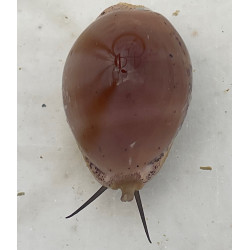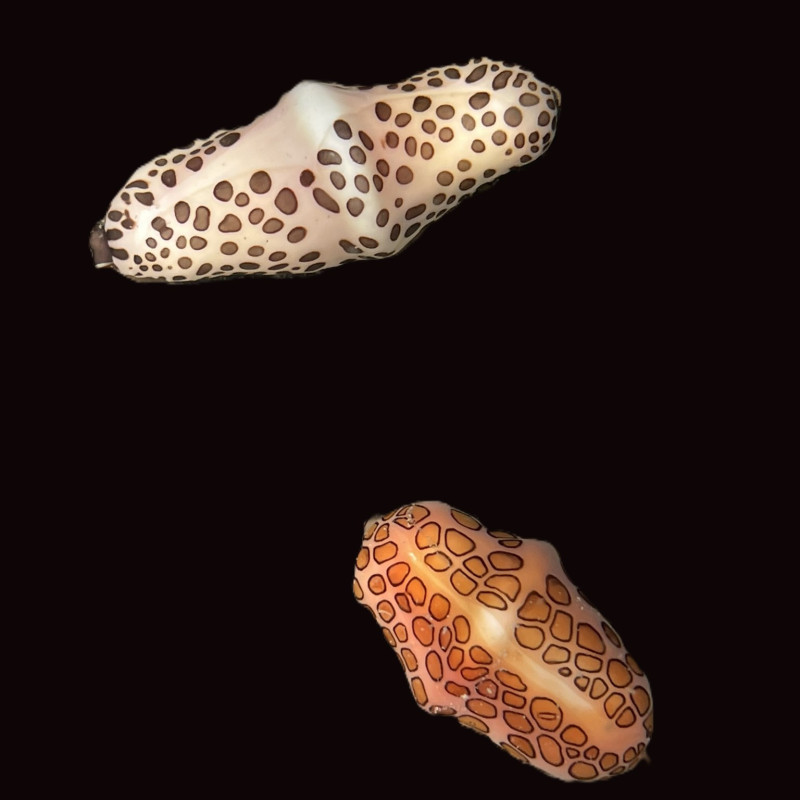


The Flamingo Tongue Snail (Cyphoma gibbosum) from the Caribbean and tropical Atlantic is a small, colorful snail with a vivid orange mantle covered in black spots. Typically 1–1.5 inches long, it feeds exclusively on gorgonian corals. Non-aggressive and mildly toxic due to chemicals from its coral diet. Reproduces sexually with separate sexes. Though beautiful, it is difficult to keep in captivity because it requires live gorgonians. Its bright coloration warns predators and makes it one of the most photographed mollusks in Caribbean reefs.
 Delivery policy
Please refer to the Terms and Conditions section for Live Arrival Policy and Shipping information.
The Flamingo Tongue Snail is a small, vividly colored marine snail famous for its striking appearance and specialized feeding habits. It is an iconic species of Caribbean reefs, often spotted on gorgonian corals where it grazes on coral tissue. Its unique pattern and bright colors make it highly recognizable and a favorite among divers and marine photographers.
Coloration:
Shell itself is generally cream or pale, but the mantle, which covers the shell, is bright orange or yellow with black spots, giving it its “flamingo tongue” name.
The vibrant mantle can retract, revealing the pale shell beneath.
Typical Size and Abundance:
Average size: 1–1.5 inches (2.5–4 cm)
Maximum size: up to 2 inches (5 cm)
Abundance: Moderately common on Caribbean reefs, usually associated with gorgonian corals. Populations are stable but can be impacted by overcollection.
Behavior and Aggressiveness:
Non-aggressive; peaceful with other reef inhabitants.
Feeds selectively on soft coral polyps without harming other species.
Reproduction and Sexuality:
Sexual reproduction with separate sexes; males and females are distinct.
Not hermaphroditic.
Toxicity:
Mildly toxic. It stores chemicals from its coral diet, which can deter predators. Not dangerous to humans but should not be consumed.
Care Difficulty:
Challenging. Requires live gorgonian corals for feeding, making it difficult to maintain in typical aquariums. Sensitive to water quality and starvation if corals are unavailable.
Fun Facts:
Its bright mantle patterns act as a warning to potential predators.
It feeds exclusively on gorgonian coral polyps.
The mantle completely covers the shell while feeding, giving it a “flamingo tongue” look.
Can reproduce successfully in the wild but is hard to breed in captivity.
An important part of reef ecosystems, helping control coral growth.

Data sheet
You might also like
The Flamingo Tongue Snail (Cyphoma gibbosum) from the Caribbean and tropical Atlantic is a small, colorful snail with a vivid orange mantle covered in black spots. Typically 1–1.5 inches long, it feeds exclusively on gorgonian corals. Non-aggressive and mildly toxic due to chemicals from its coral diet. Reproduces sexually with separate sexes. Though beautiful, it is difficult to keep in captivity because it requires live gorgonians. Its bright coloration warns predators and makes it one of the most photographed mollusks in Caribbean reefs.