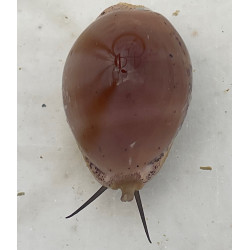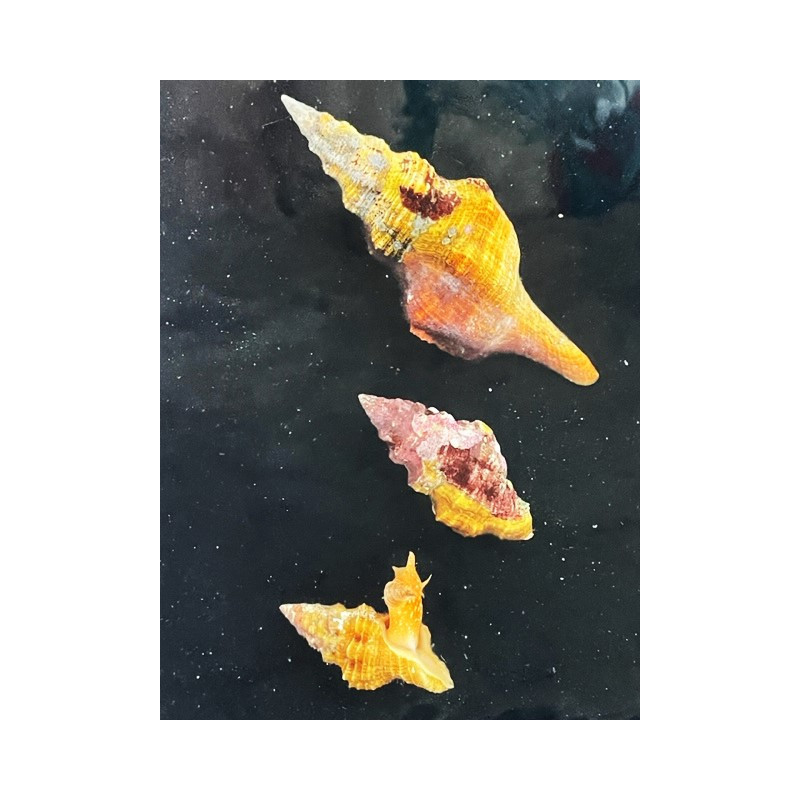

The Horse Conch is a massive predatory snail from the Caribbean and tropical Atlantic, with bright orange to reddish-orange shells reaching 20-24". Found in sandy or seagrass habitats, it feeds on smaller mollusks using its strong foot and radula. Non-aggressive to humans, non-venomous, and with separate sexes, it reproduces via external fertilization. Rare in captivity due to size, diet, and habitat needs. Fun facts: they can live up to 20 years, are apex predators, and their striking shells are popular among collectors.
 Delivery policy
Please refer to the Terms and Conditions section for Live Arrival Policy and Shipping information.
The Horse Conch is one of the largest marine snails in the Western Atlantic, renowned for its impressive, elongated shell and slow-moving predatory lifestyle. Despite the name, it is not a true conch but a large predatory gastropod.
Coloration: Shells range from bright orange to reddish-orange on the exterior, with a smooth, glossy surface. The interior is typically pale orange or cream-colored. The body itself is soft, often yellowish to orange.
Abundance & Typical Size: Horse Conchs are uncommon but can be found in sandy or seagrass habitats. Adults can reach up to 60–70 cm (24–28 inches) in shell length and weigh several kilograms.
Behavior & Aggressiveness: They are slow-moving predators, feeding primarily on other mollusks, especially smaller conchs and whelks. They are non-aggressive toward humans but actively hunt prey in their environment.
Reproduction & Sexuality: Horse Conchs are dioecious (separate sexes) and engage in external fertilization. They are not hermaphrodites.
Venom: Non-venomous and harmless to humans, although their strong foot and radula allow them to drill into prey shells.
Tenure in Captivity: Extremely difficult to maintain in captivity due to their large size, predatory diet, and specific habitat needs. They are rarely kept in home aquariums.
Fun Facts:
Horse Conchs are apex predators of many smaller mollusks, including commercially important species.
They can live up to 20 years in the wild.
Their bright orange shells are highly sought after by collectors, which has led to population declines in some areas.
They use their muscular foot to move slowly but efficiently over sandy bottoms.

Data sheet
You might also like
The Horse Conch is a massive predatory snail from the Caribbean and tropical Atlantic, with bright orange to reddish-orange shells reaching 20-24". Found in sandy or seagrass habitats, it feeds on smaller mollusks using its strong foot and radula. Non-aggressive to humans, non-venomous, and with separate sexes, it reproduces via external fertilization. Rare in captivity due to size, diet, and habitat needs. Fun facts: they can live up to 20 years, are apex predators, and their striking shells are popular among collectors.