- Out-of-Stock
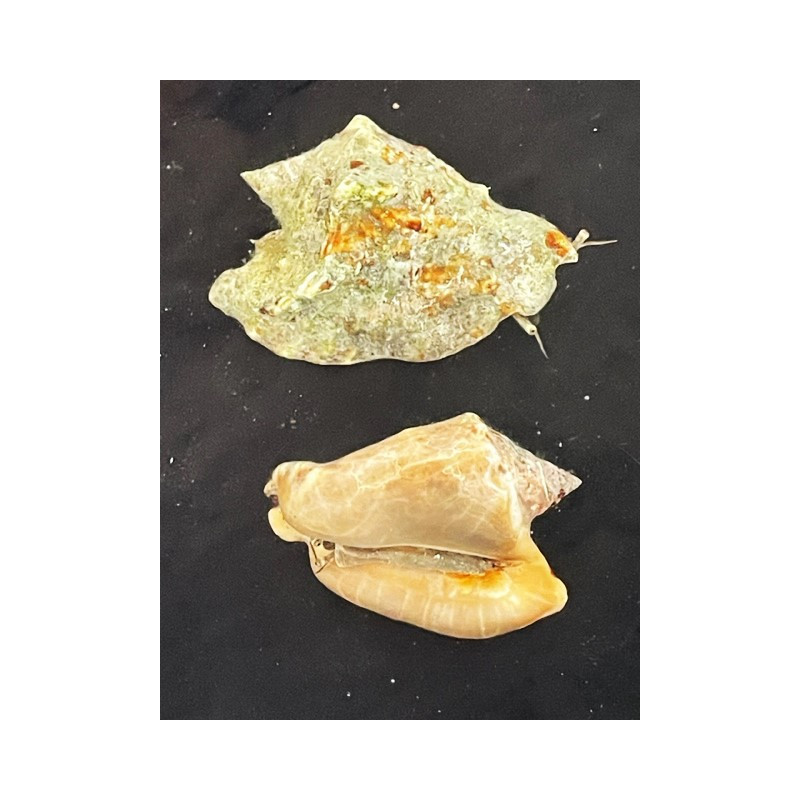

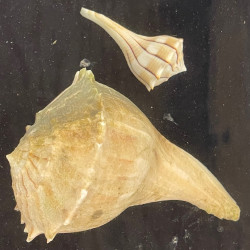
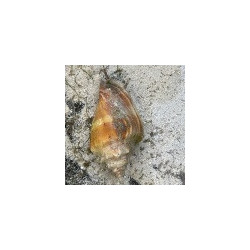
The Hawkwing Conch Snail (Lobatus raninus) from the Caribbean and tropical Atlantic is a 4–6 inch marine snail with a tan to brown shell and distinctive wing-like flares. Peaceful and non-venomous, it grazes on algae and detritus, helping keep sandy habitats clean. Reproduces sexually with separate sexes and lays eggs in sand. Easy to moderate to care for, it requires a sandy substrate and stable water conditions. Fun facts: it can “hop” using its strong foot, lives over 5 years, and is often mistaken for the Fighting Conch.
 Delivery policy
Please refer to the Terms and Conditions section for Live Arrival Policy and Shipping information.
The Hawkwing Conch Snail is a medium-to-large marine gastropod recognized by its thick, elongated shell with distinctive wing-like extensions near the aperture. It’s a fascinating species often seen gliding across sandy seafloors and seagrass beds. Despite its impressive shell, it’s a peaceful grazer that plays a vital role in cleaning reef environments.
Coloration:
Shell coloration ranges from tan to light brown with streaks or blotches of darker brown, cream, or orange.
The inner lip often has pinkish or orange hues.
The shell’s “wings” give it a unique hawk-like appearance when viewed from above.
Typical Size and Abundance:
Average size: 4–6 inches (10–15 cm)
Maximum size: up to 7 inches (18 cm)
Abundance: Fairly common across the Caribbean and tropical Atlantic, especially in sandy or grassy habitats near coral reefs.
Behavior and Aggressiveness:
Non-aggressive, peaceful, and solitary.
Uses its strong foot to move quickly and right itself if flipped over.
Helps clean algae and detritus from the substrate.
Reproduction and Sexuality:
Sexual reproduction with separate male and female individuals.
Not hermaphroditic.
Females lay egg masses in sand; larvae are planktonic before settling.
Toxicity:
Non-venomous and completely harmless to humans and other tank inhabitants.
Care Difficulty:
Easy to moderate. Adapts well to aquarium life with sandy substrate, clean water, and access to algae or detritus. Requires stable water conditions and space to move.
Fun Facts:
Named “Hawkwing” because of the flared, wing-like lip of its shell.
It’s a fast-moving snail that can “hop” short distances using its muscular foot.
Plays an important ecological role by cleaning algae and stirring sand.
Can live for more than 5 years in the wild.
Often mistaken for the Fighting Conch, but its wings and smoother shell set it apart.

Data sheet
You might also like
The Hawkwing Conch Snail (Lobatus raninus) from the Caribbean and tropical Atlantic is a 4–6 inch marine snail with a tan to brown shell and distinctive wing-like flares. Peaceful and non-venomous, it grazes on algae and detritus, helping keep sandy habitats clean. Reproduces sexually with separate sexes and lays eggs in sand. Easy to moderate to care for, it requires a sandy substrate and stable water conditions. Fun facts: it can “hop” using its strong foot, lives over 5 years, and is often mistaken for the Fighting Conch.