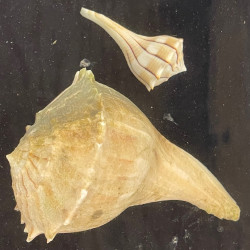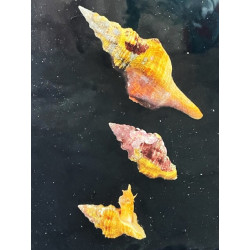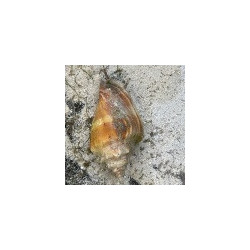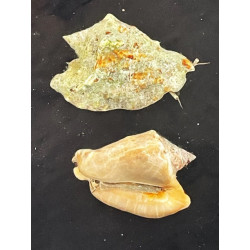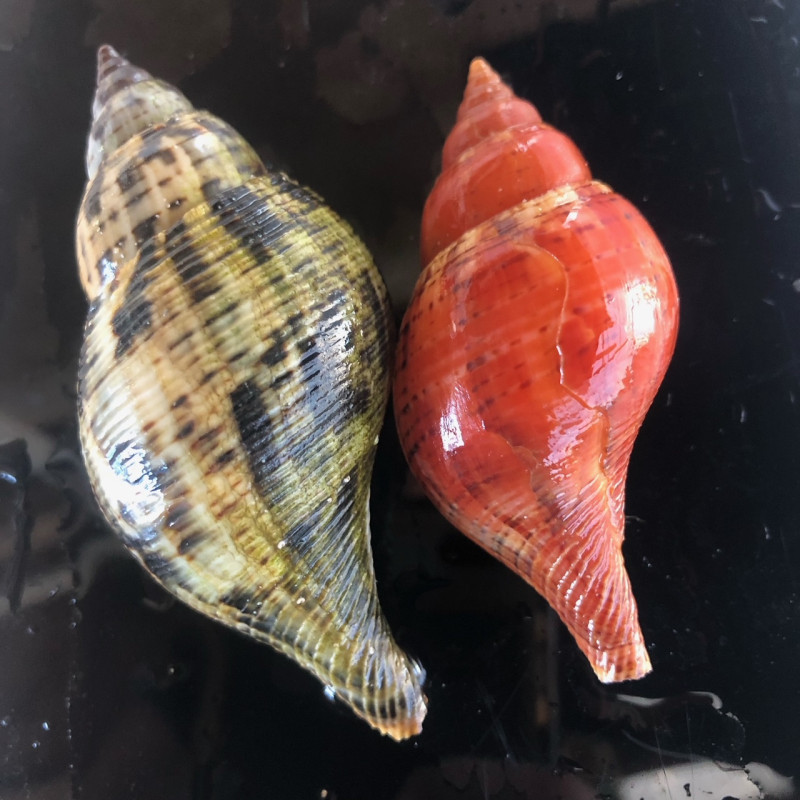

The Tulip Snail (Fasciolaria tulipa) is a predatory marine snail from the Caribbean and tropical Atlantic, known for its elegant tulip-shaped shell. Adults measure 4–8 inches long. Non-aggressive to humans, it feeds on bivalves, smaller snails, and carrion using its strong foot and radula. Dioecious with internal fertilization, females lay flattened disc-shaped egg capsules. Non-venomous and moderately difficult to keep in captivity, requiring sandy substrate, stable water conditions, and protein-rich diet. Its shell is highly valued and it can partially bury itself to ambush prey.
 Delivery policy
Please refer to the Terms and Conditions section for Live Arrival Policy and Shipping information.
The Tulip Snail is a medium-to-large predatory marine snail commonly found in sandy bottoms, seagrass beds, and shallow coastal waters throughout the Caribbean and tropical Atlantic. Named for its elegant tulip-shaped shell, it is known for both its beauty and role as a predator.
Coloration:
The shell is typically light beige, cream, or tan with spiral bands or blotches in brown, orange, or reddish tones. The interior is often smooth and lighter in color. The soft body is usually grayish to tan with darker mottling.
Abundance & Typical Size:
Fairly common in shallow marine habitats. Adults typically measure 4–8 inches in shell length.
Behavior & Aggressiveness:
Non-aggressive toward humans but an active predator, feeding on bivalves, smaller snails, and even carrion. It uses its strong foot and radula to capture and consume prey.
Reproduction & Sexuality:
Dioecious (separate sexes). Fertilization is internal, and females lay egg capsules that are often shaped like flattened discs attached to hard surfaces or seagrass.
Venom:
Non-venomous and harmless to humans, though handling should be gentle due to its fragile shell and soft body.
Tenure in Captivity:
Moderately difficult. Requires a sandy substrate, stable water conditions, and a protein-based diet. Can be kept in larger marine aquariums but may eat smaller tank mates or other mollusks.
Fun Facts:
• Its shell was historically collected and used in jewelry and crafts.
• It is a relative of the Florida Horse Conch and shares similar predatory habits.
• Tulip Snails can partially bury themselves in sand to ambush prey.
• They leave a distinctive trail as they move across sandy or muddy bottoms.

Data sheet
You might also like
The Tulip Snail (Fasciolaria tulipa) is a predatory marine snail from the Caribbean and tropical Atlantic, known for its elegant tulip-shaped shell. Adults measure 4–8 inches long. Non-aggressive to humans, it feeds on bivalves, smaller snails, and carrion using its strong foot and radula. Dioecious with internal fertilization, females lay flattened disc-shaped egg capsules. Non-venomous and moderately difficult to keep in captivity, requiring sandy substrate, stable water conditions, and protein-rich diet. Its shell is highly valued and it can partially bury itself to ambush prey.