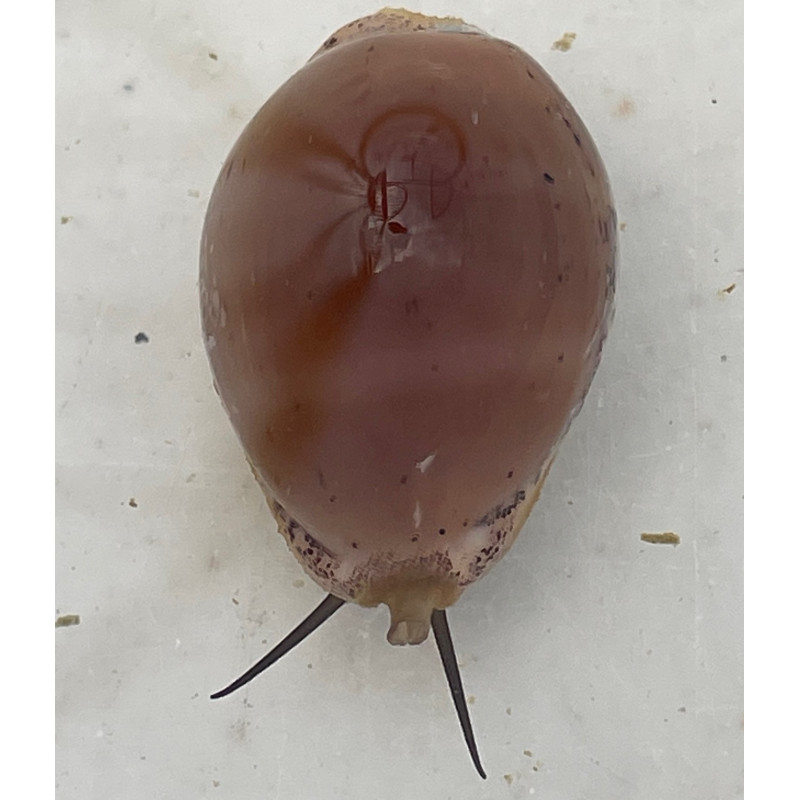


The Deer Cowrie Snail (Macrocypraea cervus) from the Caribbean and tropical Atlantic is a large, striking cowrie with a glossy, spotted shell resembling a deer’s coat. Adults typically measure 4–6 inches, occasionally reaching 6.7 inches. Calm and non-aggressive, it feeds on algae and detritus and is non-venomous. Reproduces sexually with separate sexes. Care is moderate, requiring stable water, hiding spots, and grazing material. Mostly nocturnal, long-lived, and prized by collectors for its unique appearance.
 Delivery policy
Please refer to the Terms and Conditions section for Live Arrival Policy and Shipping information.
The Deer Cowrie Snail (Macrocypraea cervus) is one of the largest and most striking cowrie species in the Caribbean and tropical Atlantic. Known for its smooth, glossy shell and distinctive pattern, it is highly prized by shell collectors and marine enthusiasts. Its elegant appearance and gentle behavior make it a fascinating addition to marine displays.
Coloration:
Shell is usually light brown to tan with darker brown spots or blotches resembling a deer’s coat, giving it its name.
The underside (aperture) is typically lighter, cream or whitish.
Juveniles may have more contrasting markings.
Typical Size and Abundance:
Average size: Adult 4–6 inches, Juvenile 1-2"
Maximum size: up to 6.7 inches (17 cm)
Abundance: Moderately rare in the wild; often found in coral reefs, under rocks, or in seagrass beds.
Behavior and Aggressiveness:
Calm and non-aggressive, strictly herbivorous or detritivorous.
No threat to other marine life, but may nibble on algae or detritus in aquariums.
Reproduction and Sexuality:
Sexual reproduction with separate sexes; females lay egg capsules on hard surfaces.
Not hermaphroditic.
Toxicity:
Non-venomous; completely safe for reef aquariums.
Care Difficulty:
Moderate. Requires stable water parameters, plenty of hiding places, and access to algae or detritus for grazing. Sensitive to poor water quality and sudden changes.
Fun Facts:
One of the largest cowrie species in the Caribbean, sometimes called the “giant deer cowrie.”
Its spotted shell pattern resembles a deer’s coat, inspiring its name.
Mostly nocturnal, hiding during the day in crevices or under rocks.
Can live for many years if cared for properly.
Its smooth, glossy shell has been used historically as currency and ornamentation in some cultures.

Data sheet
You might also like
The Deer Cowrie Snail (Macrocypraea cervus) from the Caribbean and tropical Atlantic is a large, striking cowrie with a glossy, spotted shell resembling a deer’s coat. Adults typically measure 4–6 inches, occasionally reaching 6.7 inches. Calm and non-aggressive, it feeds on algae and detritus and is non-venomous. Reproduces sexually with separate sexes. Care is moderate, requiring stable water, hiding spots, and grazing material. Mostly nocturnal, long-lived, and prized by collectors for its unique appearance.