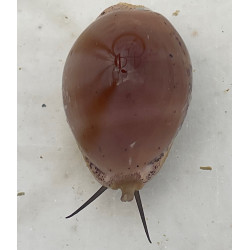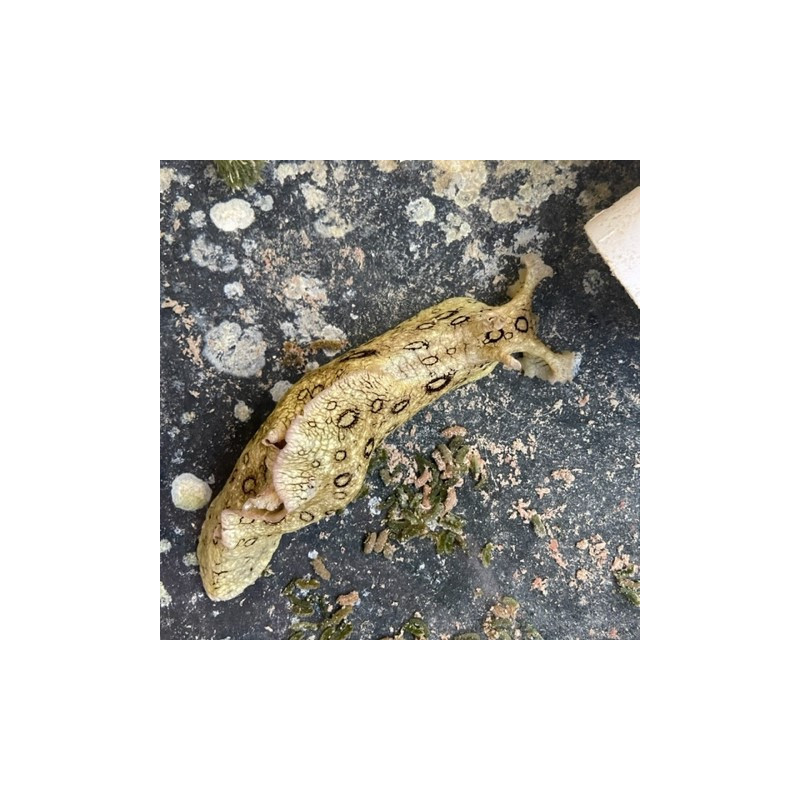

The Spotted Sea Hare (Aplysia dactylomela) is a large gastropod related to snails but with no visible shell, found in the Caribbean and tropical Atlantic. Adults measure 8–12 inches long and have a soft, greenish-brown or olive body covered with large black spots. Peaceful, slow-moving, and herbivorous, it releases harmless purple ink when threatened. Hermaphroditic, often mating in chains. Moderate to difficult to keep in captivity due to algae-based diet, large size, and water quality needs. It swims by flapping its wing-like parapodia.
 Delivery policy
Please refer to the Terms and Conditions section for Live Arrival Policy and Shipping information.
The Spotted Sea Hare is a large gastropod (related to snails but with no visible external shell) commonly found in seagrass beds, coral rubble, and shallow coastal zones of the Caribbean and tropical Atlantic. Its soft, elongated body is marked with distinctive black spots, and it glides gently using its muscular foot, flapping its wing-like parapodia to swim short distances.
Coloration:
Light green, brown, or olive body with large black spots, helping it blend into algae and seagrass.
Abundance & Typical Size:
Moderately common. Adults typically measure 8–12 inches long.
Behavior & Aggressiveness:
Completely non-aggressive and slow-moving. Can release a harmless purple ink to deter predators. Herbivorous, feeding on algae.
Reproduction & Sexuality:
Hermaphroditic, with both male and female organs. Often mate in chains, exchanging sperm simultaneously.
Venom:
Non-venomous; ink is harmless to humans.
Tenure in Captivity:
Moderate to difficult. Requires large tanks, excellent water quality, and constant algae supply. Lifespan is about a year.
Fun Facts:
Named “sea hare” because its rhinophores resemble rabbit ears.
Can swim by flapping parapodia.
Purple ink was historically used as a natural dye.
Gentle and can be handled briefly if done carefully.

Data sheet
You might also like
The Spotted Sea Hare (Aplysia dactylomela) is a large gastropod related to snails but with no visible shell, found in the Caribbean and tropical Atlantic. Adults measure 8–12 inches long and have a soft, greenish-brown or olive body covered with large black spots. Peaceful, slow-moving, and herbivorous, it releases harmless purple ink when threatened. Hermaphroditic, often mating in chains. Moderate to difficult to keep in captivity due to algae-based diet, large size, and water quality needs. It swims by flapping its wing-like parapodia.